Probiotics, the beneficial bacteria that live in the gut, have been shown in research to offer a wealth of benefits to overall wellness. One species in particular has demonstrated benefits not only for digestive health but also for healthy bones, skin, and more. Introducing Lactobacillus reuteri, more commonly known as L. reuteri. While you may not have heard of this tiny wellness ally before, today we’ll explore what it is, what it does, and how you can reap the most benefit from adding it to your daily routine.
What Is L. Reuteri?
So, what is L. reuteri exactly? Considered a probiotic bacterium, L. reuteri can be found in various parts of the body, including not only the digestive tract, but also the skin, mouth, and even breast milk (with some variations between individuals).1
As a beneficial organism, L. reuteri can help you in a number of ways, such as producing antimicrobial compounds like reuterin, a powerful tool in the fight against unwanted pathogens.1 This means that it can support a strong immune system. It also means that it contributes to a more effective lining in the gut, thereby contributing to intestinal health while also helping to block the transfer of harmful microbes from the GI tract into other tissues in the body.
While some strains of L. reuteri show a promising ability to survive stomach acid, it’s important to note that overall benefits may depend on dosage and one’s particular microbiome.
Health Benefits Of L. Reuteri
The health benefits of L. reuteri can have an impact on your overall wellness, promoting both healthy functions and tissues in the body. Here are a few ways this beneficial bacterium can help:
Gut Microbiome Support
As a probiotic, L. reuteri can help promote a healthy balance in the gut microbiome, that is, an environment where beneficial bacteria aren’t overshadowed by less helpful species. In a balanced microbiome, the body is better able to digest food and absorb crucial nutrients, which in turn can support digestive comfort and overall wellness.
Immune System Support
L. reuteri delivers antimicrobial properties by releasing reuterin, a compound that has been shown to be effective against harmful microbes when interacting with other bacteria in the GI tract.2 This promotes immune function not only by targeting harmful microbes, but also by defending the body against their transfer into other tissues by bolstering the intestinal lining.1
More broadly, probiotics like L. reuteri have been studied for their positive effects on immune signaling, such as regulating immune response and promoting both systemic and mucosal immune cells—again supporting intestinal integrity and overall immune function.3
Gut–Brain Axis
Clinical studies have found that the gut microbiome influences the connection between the enteric and central nervous systems. This effect can impact the neurotransmitters and hormones that regulate mood.4 By promoting a healthy balance in the gut through the use of probiotic supplements, including L. reuteri, you can enjoy healthier gut-brain communication and a more positive outlook.
L. Reuteri In Bone And Skin Health Research
Along with supporting the bodily functions described above, L. reuteri has also been linked to promoting the health of certain tissues, including bones and skin.
L. Reuteri for Bone Health
Studies indicate that in addition to supporting digestive health, L. reuteri may also contribute to stronger bone density, particularly among post-menopausal women.5 This is a promising field of research, although the exact mechanisms of the benefit are still being examined. What is known is that older women who consistently supplement with L. reuteri for at least one year experience an improved gut microbiota, and this in turn appears to correlate with improved bone mineral density.6
L. Reuteri for Skin Health
L. reuteri’s antimicrobial and immune-enhancing effects extend even to the skin, as this probiotic has been seen in clinical trials to have a very positive impact against common bacteria found in skin lesions such as acne.7 Additionally, L. reuteri is associated in other trials with protective effects for keratinocytes, skin cells that produce keratin.8 This, combined with its demonstrated ability to aid against the breakdown of collagen in the skin,9 has led some researchers to further investigate L. reuteri’s benefits for the healthy aging of skin tissues over time. Note that in these trials, L. reuteri was taken in a combination probiotic supplement or was applied topically to the skin.
Best Time To Take L. Reuteri
When is the best time to take L. reuteri supplements? The answer to this question may not be as specific as you’d expect. Generally, probiotic supplements are taken on an empty stomach, such as first thing in the morning. They may also be taken with a light meal.10 This is because the composition of your stomach may influence the survival of probiotic bacteria during digestion. For this reason, you’ll want to avoid taking L. reuteri or other probiotics along with very hot food or beverages, or those that are highly acidic, such as soft drinks. The high temperature or acidity of the stomach’s contents can negatively affect bacteria’s viability.11
The more important thing to remember is consistency over time and a regular routine. Taking your probiotics at about the same time each day will ensure better results than worrying over whether that time should be early morning or late evening. In the end, it isn’t so much when to take L. reuteri, but how.
How To Take L. Reuteri Supplements
The fastest and easiest way to include more L. reuteri in your daily routine is through supplementation. When you take a probiotic supplement that includes L. reuteri, you can be confident that you’re receiving a standardized CFU (live and active) count of the bacteria (indicated on the product label). You can also easily incorporate the supplement into the time of day that works best for your schedule.
In addition to L. reuteri supplements, some also consume yogurt for additional probiotic support. This is a healthy practice in general, although ensuring that the yogurt you consume has sufficient amounts of key bacterial strains can be difficult. A clever compromise may be to open a probiotic capsule and pour the contents into your homemade yogurt, or a low-sugar Greek yogurt, for a protein boost along with probiotics.
Frequently Asked Questions
Can L. reuteri support skin health?
Yes, there is some research evidence to suggest that L. reuteri, through its antimicrobial secretions of reuterin, may offer defense against certain harmful species of bacteria and may also support healthy aging of skin.7,9 This research, however, is limited, and you should discuss with your doctor before adding any new topical or supplemental product to your daily regimen.
Can L. reuteri help support digestive comfort?
Probiotics such as L. reuteri may help maintain a balanced gut microbiome, which plays a role in digestive function and comfort. Some individuals report improvements in digestive comfort when adding probiotics, though results can vary based on strain, dose, and individual microbiome differences.
*These statements have not been evaluated by the Food and Drug Administration. These products are not intended to diagnose, treat, cure, or prevent any disease.
References:
- Mu, Q., et al. Front Microbiol. 2018 Apr 19;9:757. Read source
- Schaefer, L., et al. Microbiology (Reading). 2010 Jun;156(Pt 6):1589-1599. Read source
- Yan, F. and Polk, B. Curr Opin Gastroenterol. 2011 Oct;27(6):496-501. Read source
- Appleton, J. Integr Med (Encinitas). 2018 Aug;17(4):28-32. Read source
- Nilsson, G., et al. J Intern Med. 2018 Sep;284(3):307-317. Read source
- Li, P., et al. NPJ Biofilms Microbiomes. 2022 Oct 19;8(1):84. Read source
- Kang, S., et al. J Microbiol. 2012 Feb;50(1):137-42. Read source
- Prince, T., et al. Appl Environ Microbiol. 2012 Aug;78(15):5119-26. Read source
- Nu, S., et al. Biocell. July 2025; 49(7): 1291-1310. Read source
- Tompkins, T., et al. Benef Microbes. 2011 Dec 1;2(4):295-303. Read source
- Mendonça. A., et al. 2022 Dec 30;11(1):95. Read source
DISCLAIMER:
These statements have not been approved by the Food and Drug Administration. These products are not intended to diagnose, treat, cure, or prevent disease.

























































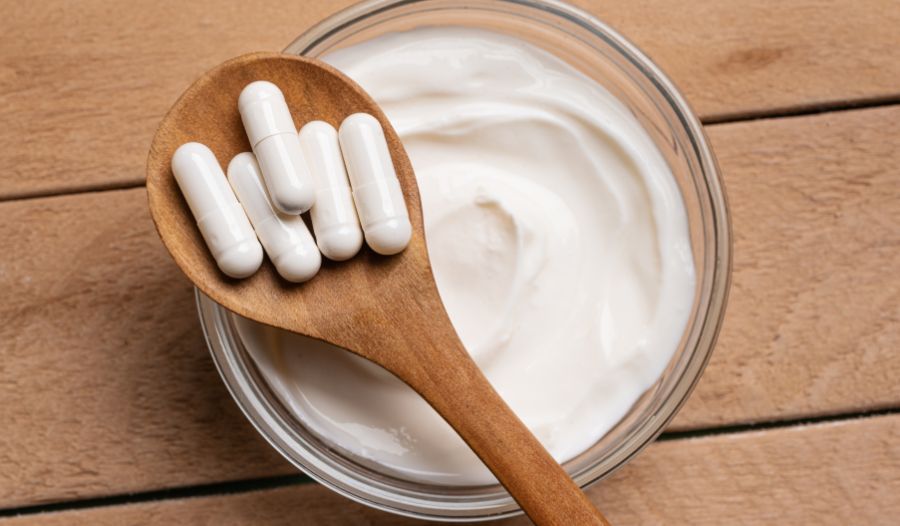
 Table of Contents


