Key Takeaways
- Prunes are dried plums with a strong nutrient profile: They provide fiber along with vitamins and minerals like vitamin K and potassium.
- They’re commonly associated with digestive health: Prunes and prune juice are often used to support regularity.
- They offer more than just fiber: Prunes contain naturally occurring sugars, antioxidants, and other plant compounds.
- Research is ongoing across multiple areas: Studies have explored links to gut, bone, and heart health, though findings vary.
- They’re easy to incorporate into meals: Prunes can be eaten on their own or added to snacks, smoothies, baked goods, and savory dishes.
Dietitians, doctors, and grandmothers have touted prunes for eons. Their best-known attribute is keeping the bowels regular. But there is a lot more to prunes than that. Get ready to be inspired to add these sweet morsels to your day.
Prune Nutrition
Being a plant and a “health food” from way back, it’s no surprise prunes qualify for a whopping 11 nutrient content and health claims. When a food "qualifies" for a nutrient content claim, it must contain a scientifically verified amount of a nutrient relative to the Daily Value (DV). Some of which are:
- Fat free
- Saturated fat-free
- Cholesterol free
- Sodium free
- A good source of fiber and copper
- An excellent source of vitamin K
At under 100 calories for about 4-6 prunes, it’s surprising how many nutrients are found in a serving! With each bite, you’re getting potassium, riboflavin, niacin, vitamin B6, boron, and several phytochemicals. Another bonus – prunes have no added sugar but offer a wealth of sweetness from their nutrient-packed, natural sugars. Prune juice can boast that it is a good source of iron as well.
Prune Health Benefits
The California Prune Board cites that over 70 studies have been published on prunes around “healthy digestion, gut health, bone health, heart health, weight management, satiety, and more.” Study results show many potential benefits:
- Digestion – Prunes and prune juice may help constipation, often working better than some over-the-counter laxatives and without causing side effects.
- Gut Health – Eating prunes daily may improve gut microbes.
- Bone Health – Due to prunes’ nutritional uniqueness, eating 5-6 prunes a day may prevent bone breakdown, help with bone building, and increase bone mineral density (BMD).
- Heart Health – Many of the nutrients in prunes support heart health. Research shows that eating them daily may lower total cholesterol, oxidative stress, and inflammatory markers.
- Appetite – Prunes have been shown to help satisfy hunger and reduce appetite.
Aging and brain health – Due to their anti-inflammatory nutrients, it has been suggested that regularly eating prunes may benefit age-related brain decline.
How to Shop for Prunes
In their most common form, prunes can typically be found in the dried fruit section, whether in-store or online. Occasionally, they come out of their “prune disguise” and are referred to as what they really are: dried plums. So, look for both names, prunes or dried plums, on packaging.
Creative Ways to Use Prunes
There are many ways to pop some prunes into the day – from sweet, savory, quick, or culinary methods:
- Au Naturel – This is a fancy-sounding, French word for enjoying prunes plain and simple. Follow these quick directions: Pop a prune (or five) into the mouth whenever there’s a need for a snack or something sweet. For a balanced snack, pair with nuts, cheese, or yogurt.
- Pro tip: Pack a bag of prunes when traveling. Many people suffer from bowel problems, and there tends to be a lack of high-fiber meals when on the go. Prunes are a convenient solution for adding no-fuss fiber to keep you and your bowels on the move.
- Breakfast – Add some prune nutrition to the morning routine.
- Stewed prunes are an age-old favorite. Eat plain or topped on granola, oatmeal or plain yogurt.
- Spread prune puree on toast, pancakes, or waffles.
- Add chopped prunes to hot and cold cereals.
- Serve a small glass of 100% prune juice with a balanced breakfast.
- Smoothies – Blend a few into any smoothie recipe to add natural sweetness, fiber, and deep flavor.
- Baking – Prunes add nutrition, moisture, natural sweetness, and extra flavor to baked goods.
- Prune puree (homemade or use prune baby food) can be used in place of some of the oil or butter and sugar in recipes.
- Search for recipes that use prunes in muffins, cakes, quick breads, brownies, and cookies.
- Try adding chopped prunes in place of raisins in recipes.
- Prunes can be used to make hoisin sauce and other stir-fry sauces for a yummy pair with noodles or rice, vegetables, and protein (try with chicken, seafood, tofu, pork, or red meat)
- Prunes can be used to make a mole sauce, a traditional Mexican sauce.
- Use as a spread. Prune puree can add a unique flavor to sandwiches to “up” the sandwich game. Pair it with chicken, turkey, pork, or tofu.
- The California Prune Board suggests using reduced prune juice “as a glaze for meats or vegetables, or add prune puree to sauces and dressings.” Try adding chopped prunes or puree to meatballs and burgers to improve flavor and texture.
- Add chopped prunes to salads.
There’s a plethora of prune possibilities. Sweet or savory? Simple or culinary creation? These small but mighty wonder fruits are a yummy way to pack in a ton of nutrients, health benefits, and, best of all, natural sweetness into your day.
References:
- Prune - Have A Plant - Fruits And Veggies
- Nutrient Claims on Food Labels | Colorado State University Extension Website. (2019, July 25). Colorado State University Office of Engagement and Extension. https://extension.colostate.edu/resource/nutrient-claims-on-food-labels/
- Benefits of Prunes - California Prunes
- Alasalvar C, Chang SK, Kris-Etherton PM, Sullivan VK, Petersen KS, Guasch-Ferré M, Jenkins DJA. Dried Fruits: Bioactives, Effects on Gut Microbiota, and Possible Health Benefits-An Update. Nutrients. 2023 Mar 26;15(7):1611. doi: 10.3390/nu15071611. PMID: 37049451; PMCID: PMC10097306.
- Nutrition & Health Benefits - California Prunes
DISCLAIMER:
These statements have not been approved by the Food and Drug Administration. These products are not intended to diagnose, treat, cure, or prevent disease.

























































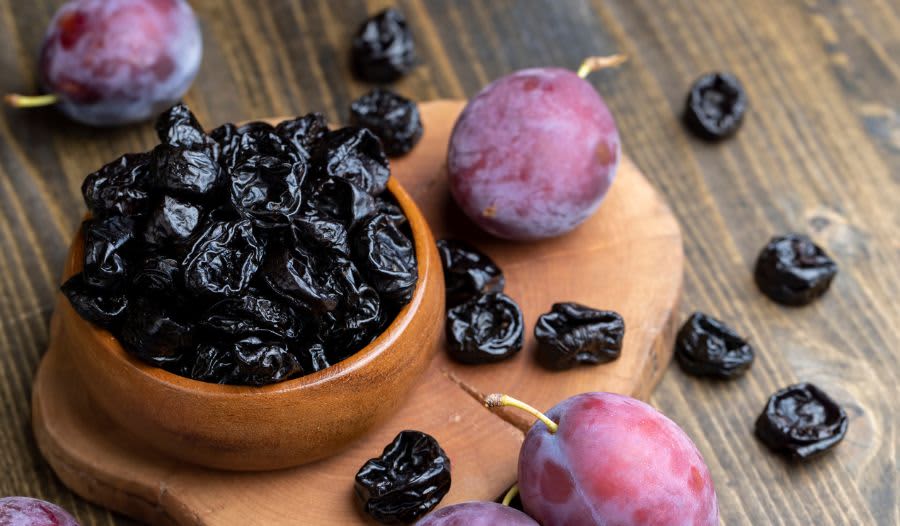
 Table of Contents